Chevron to realign its gas and midstream business


SAN RAMON, Calif. (AP) — Chevron Corp. said Thursday that it will realign its gas and midstream business by consolidating its supply and trading functions into a single group.


Chevron‘s downstream business previously oversaw the company’s trading operations for crude oil and refined products, while the gas and midstream business handled Chevron’s natural gas and liquefied natural gas trading operations.


Chevron said the changes will better integrate its supply and trading activities and allow the gas and midstream business to boost the value of the company’s upstream and downstream assets.


Joseph Geagea, 53, will lead the new organization and remain a corporate vice president and president for gas and midstream.


The new organization is effective June 1.


Shares of San Ramon, Calif.-based Chevron fell 25 cents to $ 116.20 in afternoon trading.


Energy News Headlines – Yahoo! News


Title Post: Chevron to realign its gas and midstream business
Url Post: http://www.news.fluser.com/chevron-to-realign-its-gas-and-midstream-business/
Link To Post : Chevron to realign its gas and midstream business
Rating:
100%

based on 99998 ratings.
5 user reviews.
Author: Fluser SeoLink
Thanks for visiting the blog, If any criticism and suggestions please leave a comment


Read More..

Reality check needed on immigration?


STORY HIGHLIGHTS


  • Howard Kurtz: The mainstream media are rooting for immigration policy changes

  • Kurtz: Is enthusiasm causing the media to overestimate the prospects for reform?

  • He says the Republican House has been a graveyard for numerous Obama reforms

  • Kurtz: Illegal immigration still arouses visceral opposition among some Americans


Editor's note: Howard Kurtz is the host of CNN's "Reliable Sources" and is Newsweek's Washington bureau chief. He is also a contributor to the website Daily Download.


(CNN) -- The mainstream media -- you know who you are -- are rooting for immigration reform.


They like the idea of doing something to accommodate the country's 11 million undocumented immigrants, who, despite conservative rhetoric to the contrary, were never going to be banished.


They swoon over the kind of bipartisanship that brings together John McCain and Marco Rubio on the one hand and Barack Obama and Chuck Schumer on the other.


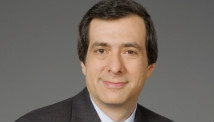
Howard Kurtz

Howard Kurtz


They believe the Republican Party needs to moderate its harsh rhetoric about immigrants -- if only to salvage its political future -- and are welcoming the GOP's new realism.


But is that enthusiasm causing media organizations to overestimate the prospects for reform?


Watch: Steve Kroft Plays Defense Over Hillary/Obama Lovefest on '60 Minutes'


Any bill still must pass the Republican House, which has been a graveyard for numerous Obama reforms. The Senate has always been a place where top lawmakers reach across the aisle more easily than in the polarized House, as was evident during the fiscal cliff debacle. And there are conservative groups determined to derail any path toward citizenship, which they view as amnesty.


It's not that journalists are acting as cheerleaders for the emerging plan. But when the media have qualms about an issue, they couch it as being "controversial" and "risky" (say, George W. Bush's plan to privatize Social Security).


Opinion: Immigrant - Can we trust Obama?


By contrast, look at the way the president's immigration speech in Las Vegas was covered:


The New York Times: "Seizing on a groundswell of support for rewriting the nation's immigration laws ..."


The Washington Post: "Obama added to momentum on Capitol Hill in favor of an overhaul of the nation's immigration laws ..."


We saw the same supportive approach when the Pentagon lifted a ban on women serving in front-line combat positions, which, despite some conservative opposition, was greeted with favorable features that largely depicted the move as long overdue.


Watch: Should N.Y. Times Have Censored Company Name Over the S-Word?


As with many perpetual Beltway disputes, the contours of a common-sense compromise on immigration have been clear for some time. The right wants tougher border enforcement and employer verification procedures. The left wants undocumented immigrants taken out of the "shadows," as Obama put it, and given a chance to become openly productive members of society.


The key are the tradeoffs. How long would a path to citizenship take? Are fines and back taxes required? How do we ensure that those who broke the law don't get an unfair advantage over legal applicants?


I don't argue with the standard political analysis that the moment may be ripe for immigration reform.


Watch: Media Seize on Emotional Moment of Gabby Giffords' Testimony


Mitt Romney, who talked about wanting immigrants to "self-deport," got clobbered among Hispanic voters. The GOP has lost the popular vote in five of the past six presidential elections. Sean Hannity, the Fox News commentator, says he has "evolved" on the issue, and he's not alone.


The conservative media may be a bellwether here. After Obama's Tuesday speech, Hannity's leadoff guest was Karl Rove, the former Bush lieutenant who favors the Senate compromise. And when Rubio, the Florida senator and son of Cuban immigrants, called in to Rush Limbaugh's show, the host -- while criticizing Obama -- told him, "What you are doing is admirable and noteworthy. You are recognizing reality."


Watch: BlackBerry 10: Is It a Hit or All Thumbs?


But illegal immigration remains a divisive subject that still arouses visceral opposition among some Americans. Capitol Hill is a place where partisan maneuvering can push the government to the brink of default. And as George W. Bush learned in his second term, hammering out a compromise on such a volatile issue is maddeningly elusive.


Perhaps the election changed the landscape and both parties will find a way to compromise. In the meantime, it might be wise to take the upbeat media coverage with a healthy dose of skepticism.


Follow us on Twitter @CNNOpinion.


Join us on Facebook/CNNOpinion.


The opinions expressed in this commentary are solely those of Howard Kurtz.


Read More..

Hadiya Pendleton's 'twin' describes death of best friend

The best friend of Hadiya Pendleton talks about the moments before her friend was shot in Chicago on January 31, 2013. (Heather Charles, Chicago Tribune)


As she and her high school classmates fled from the gunfire, Hadiya Pendleton screamed that she had been shot, fell to the ground, struggled to get up and fell again, according to her best friend.


The best friend and another girl scrambled to Pendleton's side, cradling her in their arms as others ran for help.


"I was holding her hand trying to talk her through it," her best friend told the Tribune on Thursday. "I was like, 'You're going to be fine, you're going to be OK.'"


But Hadiya, 15, died shortly after a bullet pierced her back Tuesday, igniting outrage over the senseless loss of another young victim of Chicago's out-of-control gun violence and leaving her friends staggered by the horrifying chain of events on what had been a carefree afternoon.


In the account that follows, the Tribune is not naming those who witnessed the shooting and its aftermath because the gunman is still at large.


On Tuesday afternoon, the mood outside King College Prep in North Kenwood was jubilant. The students at the elite high school had just finished final exams, classes had let out early and the winter weather was spectacular, tipping into the low 60s.


Hadiya and her best friend, both sophomores, headed toward a nearby Potbelly's, one of their favorite places to eat, the friend said. But on their way, at about 1:30 p.m., they ran into friends who invited them to Harsh Park, just a few blocks away from the school.


"We were like, 'OK, sure, who doesn't want to walk around outside when it's nice?'" Hadiya's best friend said.


As they walked, the group of about a dozen teens discussed which tests had been easy and which had been hard. Some were volleyball players from King and others went to another high school, Hadiya's friends said.


Once they reached the small, residential park, Hadiya and others headed to a playground where they swung in the warm air while chatting about their plans for the summer and their 16th birthdays. Hadiya's best friend said she and Hadiya had talked about a joint sweet 16 party and possibly wearing matching gold heels and colorful outfits to celebrate the occasion.


But then a sudden downpour drove the teens beneath a metal awning where Hadiya played "Misery Business" by the band Paramore on her cellphone and others tweeted and texted as they waited out the rain.


Minutes later, however, Hadiya's best friend said she saw a gun-wielding male scale the park fence and approach the group. She yelled a warning to her friends, but the gunman opened fire, spraying the teens with bullets as they ran.


Hadiya was struck in the back about 2:20 p.m. One teen suffered a graze wound to an ankle. And a 17-year-old junior at King was hit in the left leg below the calf, according to his mother, who said he was trying to protect his girlfriend.


The teen's mother said that her son, an Eagle Scout, didn't realize he had been shot. He felt a little sting in his leg before he looked down and saw blood.


A nurse who lived in the area and was leaving her home at the time of the shooting ran to the group, applied a makeshift tourniquet to the teen shot in the leg and called 911. The nurse instructed the others on how to take care of Hadiya.


In the meantime, another friend of Hadiya's ran to a nearby Subway restaurant, burst through the door and asked to borrow a man's phone to call 911.


But by then wailing police cars whizzed by toward the park, so she called her mom.


"I told her to stay put," her mother told the Tribune. "I can't even tell you, as a mother, what it's like to get that phone call. My goal was to get to my child."


The friend said that she and Hadiya met freshman year at a high school dance camp. The friend joined poms, while Hadiya became a majorette, traveling to Washington last month to perform in a competition with her squad during President Barack Obama's inauguration weekend.


The girls were nicknamed "twins" by classmates and teachers because of their similar appearance, the friend said. From haircut to smile to skin tone to personalities, the two were hard to tell apart, she said.


Read More..

German jitters hit European shares, euro

LONDON (Reuters) - European shares fell for a second straight day and the euro slid on Thursday, as weak German retail sales and poor earnings at its biggest bank added to investors' nerves after a shock fourth quarter contraction in the U.S. economy.


Data on Wednesday showed U.S. GDP slipped back 0.1 percent, though the country's central bank, the Federal Reserve, indicated the pullback was likely to be brief as it repeated its pledge to continue providing support.


European shares, which have surged 3.7 percent this month, took their biggest daily hit of the year on Wednesday, and a plunge in German retail sales and a huge quarterly loss from Deutsche Bank dashed hopes of a quick rebound.


London's FTSE 100 <.ftse>, Paris's CAC-40 <.fchi> and Frankfurt's DAX <.gdaxi> were all around 0.3 percent lower by 0830 GMT as trading gathered pace after shares in Asia posted modest gains. <.l><.eu><.n/>


"Perhaps the German retail sales have contributed a little bit, but we knew that Q4 was weak, so I would it attribute it more to earnings news," said Chris Scicluna, an economist at Daiwa Capital Markets.


"The Deutsche Bank loss does look to be on the sizable side. There has clearly been some mismatch between financial markets and the real economy so that does lend itself to a bit of a pullback."


In the currency market, the German jitters also left the euro under pressure. It was well off Wednesday's 14-month high at $1.3548, though the Federal Reserves promise of continued support was expected to mitigate the fall by keeping downward pressure on the dollar.


The nervy market atmosphere also pushed up Spanish and Italian government bond yields as some investors switched from higher-yielding debt into German Bunds.


Spanish 10-year yields rose 10 basis points on the day to 5.31 percent, while equivalent Italian debt rose 10 bps to 4.38 percent.


German Bund futures were half a point higher, spurred on by the Fed's determination to maintain its policy of stimulus for the U.S. economy.


Spot gold hovered near its one-week high of $1,683.39 an ounce reached on Wednesday. A weak yen pushed the most active gold contract on the Tokyo Commodity Exchange to a record high of 4,944 yen a gram on Thursday.


(Reporting by Marc Jones; Editing by Will Waterman)


Read More..

2 NFL seasons since agreement, still no HGH tests


NEW ORLEANS (AP) — Count Baltimore Ravens defensive end Arthur Jones among those NFL players who want the league and the union to finally agree on a way to do blood testing for human growth hormone.


"I hope guys wouldn't be cheating. That's why you do all this extra work and extra training. Unfortunately, there are probably a few guys, a handful maybe, that are on it. It's unfortunate. It takes away from the sport," Jones said.


"It would be fair to do blood testing," Jones added. "Hopefully they figure it out."


When Jones and the Ravens face the San Francisco 49ers in the Super Bowl on Sunday, two complete seasons will have come and gone without a single HGH test being administered, even though the league and the NFL Players Association paved the way for it in the 10-year collective bargaining agreement they signed in August 2011.


Since then, the sides have haggled over various elements, primarily the union's insistence that it needs more information about the validity of a test that is used by Olympic sports and Major League Baseball. HGH is a banned performance-enhancing drug that is hard to detect and has been linked to health problems such as diabetes, cardiac dysfunction and arthritis.


"If there are guys using (HGH), there definitely needs to be action taken against it, and it needs to be out of (the sport)," Ravens backup quarterback Tyrod Taylor said. "I'm pretty sure it'll happen eventually."


At least two members of Congress want to make it happen sooner, rather than later.


House Oversight and Government Reform Committee chairman Darrell Issa, a California Republican, and ranking Democrat Elijah Cummings of Maryland wrote NFLPA head DeMaurice Smith this week to chastise the union for standing in the way of HGH testing and to warn that they might ask players to testify on Capitol Hill.


Smith is scheduled to hold his annual pre-Super Bowl news conference Thursday.


"We have cooperated and been helpful to the committee on all of their requests," NFLPA spokesman George Atallah said. "If this is something they feel strongly about, we will be happy to help them facilitate it."


Several players from the Super Bowl teams said they would be willing to talk to Congress about the issue, if asked.


"I have nothing to hide. I can't speak for anyone else in football, but I would have no problem going," said Kenny Wiggins, a 6-foot-6, 314-pound offensive lineman on San Francisco's practice squad.


But Wiggins added: "There's a lot more problems in the U.S. they should be worried about than HGH in the NFL."


That sentiment was echoed by former New York Giants offensive lineman Shaun O'Hara, who now works for the NFL Network.


"Do I think there is an HGH problem in the NFL? I don't think there is. Are there guys who are using it? I'm sure there are. But is it something Congress needs to worry about? No. We have enough educated people on both sides that can fully handle this. And if they can't, then they should be fired," said O'Hara, an NFLPA representative as a player. "I include the union in that, and I include the NFL. There is no reason we would need someone to help us facilitate this process."


Issa and Cummings apparently disagree.


In December, their committee held a hearing at which medical experts testified that the current HGH test is reliable and that the union's request for a new study is unnecessary. Neither the league nor union was invited to participate in that hearing; at the time, Issa and Cummings said they expected additional hearings.


"We are disappointed with the NFLPA's remarkable recalcitrance, which has prevented meaningful progress on this issue," they wrote in their recent letter to Smith. "We intend to take a more active role to determine whether the position you have taken — that HGH is not a serious concern and that the test for HGH is unreliable — is consistent with the beliefs of rank and file NFL players."


Atallah questioned that premise.


"To us, there is no distinction between players and the union. ... The reason we had HGH in our CBA is precisely because our players wanted us to start testing for it," Atallah said. "We are not being recalcitrant for recalcitrance sake. We are merely following the direction of our player leadership."


Wiggins and other players said no one can know for sure how much HGH use there is in the league until there is testing — but that it's important for the union's concerns about the test to be answered.


"The union decides what is best for the players," said Ravens nose tackle Ma'ake Kemoeatu, who said he would be willing to go to Capitol Hill.


"I feel like some guys are on HGH," said 49ers offensive lineman Anthony Davis, who would rather not speak to Congress. "I personally don't care if there is testing. It's something they have to live with, knowing they cheated, and if they get (outplayed) while they're on it, it's a hit on their pride."


___


Follow Howard Fendrich on Twitter at http://twitter.com/HowardFendrich


Read More..

BlackBerry must remember strengths


STORY HIGHLIGHTS


  • BlackBerry sales have slumped in the U.S. but is still strong in emerging markets

  • New models launched should remember why they are popular in developing world

  • In places like Brazil and South Africa, the 10 is the update to their current phone

  • in Sub-Saharan Africa there is expected to be 175 million new customers in the next 3 years


Watch Jim Clancy on CNN International's "The Brief" at 4p.m. ET GMT Friday.


(CNN) -- BlackBerry's loss of market share in the U.S. is the stuff of legends. Last fall, it was estimated only about 2% of American phone users were still carrying their BlackBerry mobile with its iconic keypad.


But consider this: sub-Saharan Africa is expected to add 175 million new mobile users in just the coming 3 years. That's according to the GSMA, which represents the world's mobile operators.


"Mobile has already revolutionized African society and yet demand still continues to grow by almost 50 percent a year," said Tom Phillips, Chief Government and Regulatory Affairs Officer, GSMA.


That could be good news indeed for BlackBerry. Research in Motion, the maker of BlackBerry, estimates it holds a 70% market share in countries like South Africa.


The company's new phones, announced this week, are not the ones some of its best customers in emerging markets would like to buy. They're too expensive. But Research in Motion -- which also this week changed its company name to BlackBerry -- is pledging some of its six new models will address that.


While millions in China, Europe and the U.S. have adopted Android or iOS smartphones with a vengeance, millions more users in emerging markets are enthused about what's in store for the new BlackBerry 10. It's the update for what many of them are already using.


They live in countries like Brazil, Malaysia, Nigeria, Kenya and South Africa. They have embraced the BlackBerry for a combination of factors that all point to the different way mobile devices are used.


Unlike their counterparts in Europe and America, the mobile in their pocket is more likely to be their primary link to the internet.


BlackBerry Messenger is the connection that allows these users unlimited conversations without paying charges for SMS data. While young, brand-conscious Chinese may be willing to part with several months' salary to buy the latest iPhone, African users are looking for more practical (and cheaper) connections.


What separates developed countries from their developing counterparts at street level can be summed up in a single word: infrastructure.


Isobel Coleman, senior fellow and Director of the Civil Society, Markets and Democracy Initiative at the Council on Foreign Relations, says mobile technology has proved it can bridge the gap where infrastructure is lacking.


"It's a culture, it's an economy, it's innovation, education, healthcare, it's all of these things," says Coleman.


You can take that to the bank. For many Africans, their cell phone account is the first bank account they've ever owned.


In emerging markets, mobile phone banking is growing because of the lack of infrastructure. Fewer bank branches often mean long distances to travel and long lines once you've arrived.


Africans are expected to transfer more than $200 billion per year or 18% of the continent's GDP by 2015.


Oh, and that keyboard. No matter where you are in the world, there will always be a demand for a keyboard that clicks. The company appears to understand that as BlackBerry 10 models come with both soft keypads and the traditional BlackBerry buttons.


I asked some of my Twitter followers to weigh in on the BlackBerry 10 roll out. While some said Android or Apple's iOS were in their future plans, many others expressed continued enthusiasm for the BlackBerry.


Soji, a pianist and teacher in Nigeria tweeted back "I'm falling in love with this BB. Cheaper to own."


From Kuala Lumpur, Amir wrote "I need a physical keyboard to type while also having a touch-screen for photos etc. Security factor also important."


Hans-Eric from South Africa reinforced the sentiments of many mobile users in emerging markets: "The cost of data is simply too high without it (BlackBerry.)"


The voices from emerging markets couldn't have been clearer. What they expect from BlackBerry 10 is a stronger, longer lasting battery, durability and continued low cost connectivity.


CFR's Coleman agrees that BlackBerry (and anyone else) trying to win and hold this mobile device sector has to understand how these devices are being used and give the customers what they want.


"Cheap. Rugged. Not too many bells and whistles. Practical."


There is little doubt smartphones are changing the way people use the internet, how they bank, shop and interact socially.


But it's worth keeping in perspective that in a world where there are now an estimated 1 billion smartphones, there are 5 billion feature phone users. That's a lot of upside growth potential for BlackBerry and all the other players out there.


Read More..

Hawks' streak ends in 3-2 shootout loss

Blackhawks suffered first loss of the season.


ST. PAUL, Minn. — For the first time this season, the only sounds in the Blackhawks' postgame dressing room were pieces of tape being ripped from pads and hushed tones.


Gone was the celebrating as the Hawks had their six-game winning streak to start 2013 snapped as the Wild edged them 3-2 in a shootout Wednesday night at Xcel Energy Center.


Matt Cullen scored the winner in the shootout for the Wild as the Hawks suffered their first loss on the road in five outings. Cullen and Cal Clutterbuck scored in regulation and Niklas Backstrom earned the victory in goal in relief of Josh Harding for the Wild, playing the second of back-to-back games.


"Those are the tight games in the last three or four games that we found a way to win," said Hawks captain Jonathan Toews, who scored in regulation and in the shootout. "We were this close again and we had a great chance to win in overtime and in the shootout but we just came up a bit short.


"We just wanted to play a patient game and keep wearing them down as much as we could (but) we didn't get on them as much as we wanted to."


Andrew Shaw also had a goal in regulation for the Hawks but it wasn't enough as Corey Crawford suffered the defeat in the first of the six-game trip. The Hawks managed a point and lead the NHL with 13, but fell to 4-0-1 on the road.


"We played a lot better the second half of the game," defenseman Duncan Keith said. "If we had won we probably would be saying we played a great game and we're happy, but we lost in a shootout so we're not going to get down and get negative."


After the Wild struck early in the opening period on Cullen's goal, the Hawks answered when Shaw and Toews scored 1 minute, 31 seconds apart a few minutes later. First, Shaw rushed the net and took a pass from Bryan Bickell and stuffed it past Harding.


Toews put the Hawks ahead when he snapped a quick shot from the left dot that eluded Harding. Wild coach Mike Yeo had seen enough and yanked Harding, who proceeded to take out his frustration on his goalie stick in the tunnel leading to the dressing room.


The Hawks rode the momentum of a strong penalty-killing effort into the intermission but it was short-lived as Clutterbuck redirected a long Tom Gilbert shot in the opening minute of the second.


With Crawford and Backstrom both playing well, the game eventually went to the shootout. It ended when Patrick Sharp rifled a shot off the crossbar and the Wild had the extra point.


"Going to a shootout, anything can happen," Hawks coach Joel Quenneville said. "We had the play in the last part of the game. It's disappointing, obviously, when you don't win but at least let's get excited about getting back in the 'W' column."


ckuc@tribune.com


Twitter @ChrisKuc


Read More..

Euro surges to 14-month high, Fed decision awaited

LONDON (Reuters) - The euro hit its highest level in over a year on Wednesday and shares, oil and metals were also on the rise, as confidence in the global economic outlook strengthened ahead of European data and the U.S. Federal Reserve's latest policy decision.


The Fed is expected to maintain asset buying at $85 billion a month when it concludes its meeting later and retain its commitment to hold interest rates near zero until unemployment falls to at least 6.5 percent.


European economic confidence data for January at 1000 GMT, ECB crisis loan repayments and Italy's sale of five and 10-year bonds will absorb most of investors' attention before then, as they look for further evidence of a pick-up in the region.


Share markets in London <.ftse>, Paris <.fchi> and Frankfurt <.gdaxi> opened little changed ahead of the data, leaving all eyes on a rally by the euro as it broke above $1.35 for the first time since December 2011.


Alongside the recent rebound in confidence in the euro zone, one of the drivers behind the recent spike has been the eagerness of banks to repay the crisis loans they took from the European Central Bank just over a year ago.


"It (the euro rise) is just a carry on with the current trend, risk is pretty healthy and equities are doing well," said Bank of Tokyo Mitsubishi strategist Derek Halpenny.


"The danger is European policymakers allow a spike (in euro and market rates) as a result of a removal of one of the principle support measures ... With the Fed and the BOJ still easing the euro is clearly the path of least resistance."


An earlier rise in Asian equities meant the MSCI world share index <.miwd00000pus> was up 0.2 percent at a new 21-month high as European trading gathered pace. U.S. stock futures suggested a cautious start on Wall Street.


Strong U.S. housing data on Tuesday and China's promising economic growth forecast for 2013 also supported the upbeat mood and raised expectations for robust demand for fuel and industrial commodities, underpinning oil prices and lifting copper.


In the bond market, German Bund futures opened lower as investors made room for a sale of long-dated German paper and braced for solid demand at an Italian debt auction.


Italy will offer up to 6.5 billion euros of bonds maturing in 2017 and 2022. Traders expect the sale to benefit from yield-hungry investors but flagged the risk of indigestion after a bout of buying in recent months that triggered a sharp rally.


"(The auction) probably (goes) alright but I don't think it trades well afterwards," one trader said.


(Additional reporting by Ana Nicolaci da Costa; Editing by Giles Elgood)


Read More..

A-Rod implicated in PED use again as MLB probes


NEW YORK (AP) — Alex Rodriguez is in the middle of Major League Baseball's latest doping investigation after an alternative weekly newspaper reported baseball's highest-paid star was among the big leaguers listed in the records of a Florida clinic the paper said sold performance-enhancing drugs.


The Miami New Times said Tuesday that the three-time AL MVP bought human growth hormone and other performance-enhancing substances during 2009-12 from Biogenesis of America LLC, a now-closed anti-aging clinic in Coral Cables, Fla., near Rodriguez's offseason home.


The new public relations firm for the New York Yankees third baseman issued a statement denying the allegations.


New Times said it obtained records detailing purchases by Rodriguez, 2012 All-Star game MVP Melky Cabrera, 2005 AL Cy Young Award winner Bartolo Colon and 2011 AL championship series MVP Nelson Cruz of Texas.


Cabrera left San Francisco after the season to sign with Toronto, while Oakland re-signed Colon.


Other baseball players the newspaper said appeared in the records include Washington pitcher Gio Gonzalez, who finished third in last year's NL Cy Young Award voting, and San Diego catcher Yasmani Grandal.


Biogenesis, which the New Times said was run by Anthony Bosch, was located in a beige, nondescript office park. The former clinic is no longer listed as a business in its directory,


"There was a flier put out by the building management a couple weeks ago. It was put on all the doors and windows of all the offices," said Brad Nickel, who works in a cruise planning company on the floor above where the clinic was located. "It just said this guy's not really a doctor, he doesn't belong here, he's no longer allowed here, call the police or the building management if you see him."


The New Times posted copies of what it said were Bosch's handwritten records, obtained through a former Biogenesis employee it did not identify.


Bosch's lawyer, Susy Ribero-Ayala, said in a statement the New Times report "is filled with inaccuracies, innuendo and misstatements of fact."


"Mr. Bosch vehemently denies the assertions that MLB players such as Alex Rodriguez and Gio Gonzalez were treated by or associated with him," she said.


Rodriguez appears 16 times in the documents New Times received, the paper said, either as "Alex Rodriguez," ''Alex Rod" or the nickname "Cacique," a pre-Columbian Caribbean chief.


Rodriguez admitted four years ago that he used PEDs from 2001-03. Cabrera, Colon and Grandal were suspended for 50 games each last year by MLB following tests for elevated testosterone. Responding to the testosterone use, MLB and the players' union said Jan. 10 they were authorizing the World Anti-Doping Agency laboratory outside Montreal to store each major leaguer's baseline testosterone/epitestosterone (T/E) ratio in order to detect abnormalities.


"We are always extremely disappointed to learn of potential links between players and the use of performance-enhancing substances," MLB said in a statement. "Only law enforcement officials have the capacity to reach those outside the game who are involved in the distribution of illegal performance-enhancing drugs. ... We are in the midst of an active investigation and are gathering and reviewing information."


A baseball official, speaking on condition of anonymity because he was not authorized to make public statements, said Monday that MLB did not have any documentation regarding the allegations. If MLB does obtain evidence, the players could be subject to discipline. First offenses result in a 50-game suspension and second infractions in 100-game penalties. A third violation results in a lifetime ban.


Rodriguez is sidelined for at least the first half of the season after hip surgery Jan. 16. A 50-game suspension would cost him $7.65 million of his $28 million salary.


"The news report about a purported relationship between Alex Rodriguez and Anthony Bosch are not true," Rodriguez said in a statement issued by a publicist. "He was not Mr. Bosch's patient, he was never treated by him and he was never advised by him. The purported documents referenced in the story — at least as they relate to Alex Rodriguez — are not legitimate."


Jay Reisinger, a lawyer who has represented Rodriguez in recent years, said the three-time AL MVP had retained Roy Black, an attorney from Rodriguez's hometown of Miami. Black's clients have included Rush Limbaugh and William Kennedy Smith.


Bosch did not return a phone message seeking comment.


MLB hopes to gain the cooperation of Bosch and others connected with the clinic, another baseball official said, also on condition of anonymity because no public statements on the matter were authorized. In order to successfully discipline players based on the records, witnesses would be needed to authenticate them, the official said.


Players could be asked to appear before MLB for interviews, but the official said MLB would be reluctant to request interviews before it has more evidence.


Rodriguez spent years denying he used PEDs before Sports Illustrated reported in February 2009 that he tested positive for two steroids in MLB's anonymous survey while with the Texas Rangers in 2003. Two days later, he admitted in an ESPN interview that he used PEDs over a three-year period. He has denied using PEDs after 2003.


If the new allegations were true, the Yankees would face high hurdles to get out of the final five years and $114 million of Rodriguez's record $275 million, 10-year contract. Because management and the players' union have a joint drug agreement, an arbitrator could determine that any action taken by the team amounted to multiple punishments for the same offense.


But if Rodriguez were to end his career because of the injury, about 85 percent of the money owed by the Yankees would be covered by insurance, one of the baseball officials said.


Gonzalez, 21-8 for the Washington Nationals last season, posted on his Twitter feed: "I've never used performance enhancing drugs of any kind and I never will, I've never met or spoken with tony Bosch or used any substance provided by him. anything said to the contrary is a lie."


Colon was not issuing a statement, agent Adam Katz said through spokeswoman Lisa Cohen.


"We are aware of certain allegations and inferences," Cruz's law firm, Farrell & Reisinger, said in a statement. "To the extent these allegations and inferences refer to Nelson, they are denied."


Cruz and Gonzalez had not previously been linked to performance-enhancing drugs. Cruz hit 24 home runs last year for the Rangers.


The New Times report said it obtained notes by Bosch listing the players' names and the substances they received. Several unidentified employees and clients confirmed to the publication that the clinic distributed the substances, the paper said. The employees said that Bosch bragged of supplying drugs to professional athletes but that they never saw the sports stars in the office.


The paper said the records list that Rodriguez paid for HGH; testosterone cream; IGF-1, a substance banned by baseball that stimulates insulin production; and GHRP, which releases growth hormones.


___


Associated Press writers Jennifer Kay in Coral Cables, Fla., and Curt Anderson in Miami, and AP Sports Writers Howard Fendrich and Tim Reynolds contributed to this report.

Read More..

Iran’s Space Monkey Launch Prompts Missile Technology Concerns


The reports that Iran launched a monkey into space Monday has sparked concern among U.S. officials and missile watchdog groups who cite that the same technology could be used to extend the reach of Iran’s military weapons.


According to Iranian news reports, the country’s space agency launched a monkey into space and returned it to Earth in a mission using the Iranian-built Kavoshgar 5 rocket. The launch, while unconfirmed by Western monitoring groups, has raised eyebrows because the rockets developed for such missions could also be used to fire weapons across continents.


“We don’t have any way to confirm this one way or the other with regard to the primate,” U.S. State Department spokeswoman Victoria Nuland said during a press briefing in Washington Monday (Jan. 28), though she added that she “saw the pictures of the poor little monkey preparing to go to space.”


“Our concern with Iran’s development of space-launch vehicle technologies are obviously well known,” Nuland said. “Any space-launch vehicle capable of placing an object in orbit is directly relevant to the development of long-range ballistic missiles.” [Photos: Iran in Space: Rockets & Monkeys]


However, some scientist have said that the details so far on the Iranian rocket launch suggest the flight would do little to enhance the Islamic republic’s ability to develop a long-range ballistic missile.


Though the Islamic republic has denied military ambitions for its space program, Western critics have long expressed concern over the potential applications of Iran’s rockets. Nuland said the launch, if confirmed, would violate a 1929 U.N. Security Council resolution that “prohibits Iran from undertaking any act related to ballistic missiles capable of delivering nuclear weapons.”


The Union of Concerned Scientists (UCS) said the launch, if it occurred, likely used a Kavoshgar rocket, which would do little to advance Iran’s missile capabilities.


Laura Grego, a senior scientist with UCS, wrote in a blog post that “some concern has been expressed that Iran will improve its abilities to produce heat shielding (important both for protecting a monkey and a warhead as they return through the atmosphere).” But a biocapsule returning from a 75-mile (120 kilometers) altitude, such as Iran’s monkey-carrying Pishgam capsule, would travel through the atmosphere significantly slower than an intercontinental ballistic missile, or ICBM.


According to Grego, “a warhead would require shielding against more than 40 times greater heat load than the Pishgam.”


Iran has reported progress in spaceflight technology in recent years. The country sent its first domestically built satellite into space in February 2009 and launched a Kavoshagar-3 rocket in 2010 that delivered a rat, two turtles and a worm into space. Iran also launched Earth-observing satellites into orbit in 2011 and 2012.


Space officials in the country have said that a successful launch of a monkey would pave the way for them to send a human into space by 2020 and put an astronaut on the moon by 2025.


Follow SPACE.com on Twitter @Spacedotcom. We’re also on Facebook and Google+.


Copyright 2013 SPACE.com, a TechMediaNetwork company. All rights reserved. This material may not be published, broadcast, rewritten or redistributed.
Space and Astronomy News Headlines – Yahoo! News


Title Post: Iran’s Space Monkey Launch Prompts Missile Technology Concerns
Url Post: http://www.news.fluser.com/irans-space-monkey-launch-prompts-missile-technology-concerns/
Link To Post : Iran’s Space Monkey Launch Prompts Missile Technology Concerns
Rating:
100%

based on 99998 ratings.
5 user reviews.
Author: Fluser SeoLink
Thanks for visiting the blog, If any criticism and suggestions please leave a comment


Read More..