Storm begins to coat Chicago area with snow


Between and inch-and-a-half and two-and-a-half inches of snow has fallen across much of the Chicago region, though the snow is expected to turn to freezing drizzle in the next couple hours.


Meteorologists have scaled back their predictions on snow fall totals from the storm, though.


Illinois State Police described conditions as "horrible" and have responded to about 15 crashes already.


State Police are in a "snow plan" and aren't responding to accidents without injuries - those are supposed to be reported later.


"It will be tapering off from the south in the next couple hours, possibly some freezing drizzle across whole area," said Mark Ratzer, meteorologist for the National Weather Service. "We may end up coming in a little less."


The city of Chicago has sent 199 plows to work clearing main thoroughfares, according to the streets and sanitation department.


Check back for more information.


chicagobreaking@tribune.com

Twitter: @ChicagoBreaking


Read More..

Syrian opposition says Assad cannot be part of deal


CAIRO (Reuters) - The opposition Syrian National Coalition is willing to negotiate a peace deal to end the country's civil war but President Bashar al-Assad must step down and cannot be a party to any settlement, members agreed after debating a controversial initiative by their president.


The meeting of the 70-member Western, Arab and Turkish-backed coalition began on Thursday before Syrian Foreign Minister Walid al-Moualem is due for talks in Moscow, one of Assad's last foreign allies, and as U.N. mediator Lakhdar Brahimi renews efforts for a deal.


After an angry late night session in which coalition president Moaz Alkhatib came under strong criticism from Islamist and liberal members alike for proposing talks with Assad's government without setting what they described as clear goals, the coalition adopted a political document that demands Assad's removal and trial for the bloodshed, members said.


A draft document seen by Reuters that was circulated for debate said Assad cannot be party to any political solution and has to be tried, but did not directly call for his removal.


"We have adopted the political document that sets the parameters for any talks. The main addition to the draft is a clause about the necessity of Assad stepping step down," said Abdelbasset Sida, a member of the coalition's 12 member politburo who has criticized Alkhatib for acting alone.


"We removed a clause about a need for Russian and U.S. involvement in any talks and added that the coalition's leadership has to be consulted before launching any future initiatives," he added.


Still, the agreement marked a softening of tone by the coalition because previously it had insisted that Assad must step down before any talks with his government could begin.


In an indication that Syria's strongman remains defiant, Brahimi said Assad had told him he will remain president until his term ends in 2014 and then run for re-election.


Brahimi told al-Arabiya television he wants to see a transitional government formed in Syria that would not answer to any higher authority and lasts until U.N.-supervised elections take place in the country.


"I am of the view that U.N. peacekeepers should come to Syria as happened in other countries," Brahimi said.


BOMB, AIR STRIKES


The opposition front convened in Cairo on a day when a car bomb jolted central Damascus, killing 53 people, wounding 200 and incinerating cars on a busy highway close to the Russian Embassy and offices of the ruling Baath Party.


Syrian state television blamed the suicide blast on "terrorists". Central Damascus has been relatively insulated from the 23-month conflict that has killed around 70,000 people, but the bloodshed has shattered suburbs around the capital.


In the southern city of Deraa near the border with Jordan, activists said warplanes bombed the old quarter for the first time since March 2011, when the town set in a wheat-growing plain rose up against Assad, starting a national revolt.


A rebel officer in the Tawheed al-Janoub brigade which led an offensive this week in Deraa said there were at least five air strikes on Thursday. The Syrian Observatory for Human Rights said 18 people were killed, including eight rebel fighters.


Coalition member Munther Makhos, who was forced into exile in the 1970s for his opposition to Assad's father, the late President Hafez al-Assad, said supplies from Iran and Russia were giving government forces an awesome firepower advantage.


"It would be surreal to imagine that a political solution is possible. Bashar al-Assad will not send his deputy to negotiate his removal. But we are keeping the door open," Makhos said.


Makhos is the only Alawite in the Islamist-dominated coalition. The Alawite sect, an offshoot of Shi'ite Islam which accounts for about 10 percent of Syria's population but makes up most of the intelligence apparatus and dominates the army and the political system, has generally remained behind Assad.


With Alawites feeling increasingly threatened by a violent Sunni backlash, Alkhatib, a cleric from Damascus who played a role in the peaceful protest movement against Assad at the beginning of the uprising in 2011, has been calling on Alawites to join the revolution, saying their participation will help preserve the social fabric of the country.


Alkhatib's supporters say the initiative has popular support inside Syria from people who want to see a peaceful departure of Assad and a halt to the war that has increasingly pitted his fellow Alawites against Syria's Sunni Muslim majority.


But rebel fighters on the ground, over whom Alkhatib has little control, are generally against the proposal.


The Syrian Islamic Liberation Front, which represents armed brigades, said in a statement it was opposed to Alkhatib's initiative because it ignored the revolt's goal of "the downfall of the regime and all its symbols".


"We are demanding his accountability for the bloodshed and destruction he has wreaked. I think the message is clear enough," said veteran opposition campaigner Walid al-Bunni, who supports Alkhatib.


Alkhatib formulated the initiative in broad terms last month after talks with the Russian and Iranian foreign ministers in Munich but without consulting the coalition, catching the umbrella organization by surprise.


Among Alkhatib's critics is the Muslim Brotherhood, the only organized group in the political opposition.


A Brotherhood source said the group will not scuttle the proposal because it was confident Assad is not interested in a negotiated exit, which could help convince the international community to support the armed struggle for his removal.


"Russia is key," the source said, speaking on condition of anonymity. "We are showing the international community that we are willing to take criticism from the street but the problem is Assad and his inner circle. They do not want to leave."


PLAY FOR RUSSIA


Russia hopes Alkhatib will visit soon in search of a breakthrough. Bunni said Alkhatib would not go to Moscow without the coalition's approval and that he would not be there at the same time as Moualem.


"In my opinion Alkhatib should not go to Moscow until Russia stops sending arms shipments to the Assad regime," Bunni said.


Formal backing by the coalition for Alkhatib's initiative gives it more weight internationally and undermines Assad supporters' argument that the opposition is too divided to be considered a serious player, opposition sources said.


Coalition members and diplomats based in the region said Brahimi asked Alkhatib in Cairo last week to seek full coalition backing for his plan, which resembles the U.N. envoy's own ideas for a negotiated settlement.


One diplomat in contact with the opposition and the United Nations had said a coalition approval of Alkhatib's initiative could help change the position of Russia, which has blocked several United Nations Security Council resolutions on Syria.


The diplomat said only a U.N. resolution could force Assad to the negotiating table, and a U.N. "stabilization force" may still be needed to prevent an all-out slide into a civil war.


"Brahimi has little hope that Assad will agree to any serious talks," the diplomat said. "Differences are narrowing between the United States and Russia about Syria but Moscow remains the main obstacle for Security Council action."


(Editing by Paul Taylor and Mohammad Zargham)


Read More..

Doubt on Fed easing hits shares, commodities

LONDON (Reuters) - World share markets fell and the dollar and safe-haven assets rose on Thursday, a day after minutes of the Federal Reserve's last policy meeting cast doubts over how much longer the U.S. central bank would stick to its stimulus plan.


After the minutes were released the euro skidded to a six-week low against the dollar of $1.3235, Asian shares experienced their worst day in seven months and gold hit its lowest price since last July, at $1,554.49 an ounce.


"Disagreement over the current path is causing concern for a market that demands certainty," Ben Taylor, a trader at CMC Markets, said of evidence Fed officials were divided on policy.


MSCI's world equity index <.miwd00000pus>, which only on Wednesday had touched a 4-1/2 year high, fell 0.5 percent as the benchmark S&P 500 index <.spx> suffered its steepest daily percentage decline since mid-November.


European markets joined in the selloff with the FTSE Eurofirst 300 index <.fteu3> shedding 0.5 percent, led lower by the banks <.sxip>, which have been at forefront of recent gains. London's FTSE 100 <.ftse>, Paris's CAC-40 <.fchi> and Frankfurt's DAX <.gdaxi> were all down as much as 0.7 percent.


However, market sentiment could get some support from the release of first reading from February Purchasing Managers' Indexes (PMIs) from across Europe later in the day.


The euro-zone composite PMI is expected to have risen for a fourth consecutive month in February to around 49.0, adding to evidence that economic conditions across the recession-hit region are gradually improving.


The PMI reading would still leave the composite index below the 50 mark which separates expansion from contraction and analysts estimate it would be consistent with a small fall in GDP for a fourth consecutive quarter.


In the fixed income market, German bonds, normally considered a safe haven, saw prices rise with the main Bund futures contract up 30 ticks to 142.85. The move reversed a fall seen on Wednesday but kept the contract within a narrow band before an Italian general election this weekend.


Spain was set to test market sentiment for peripheral euro zone debt with the sale of up to four billion euros of new paper.


The dollar followed up a big gain on Wednesday against a basket of major currencies to add a further 0.1 percent, although it dipped slightly against the yen to 93.41.


Among commodities, London copper struck its lowest in nearly two months, at $7,880 a metric ton, while crude oil extended losses after posting its biggest daily fall so far this year on Wednesday.


(Reporting by Richard Hubbard; Editing by Alastair Macdonald)


Read More..

Police: Pistorius detective faces charges himself


PRETORIA, South Africa (AP) — The lead investigator in the murder case against Oscar Pistorius faces attempted murder charges himself over a 2011 shooting, police said Thursday in another potentially damaging blow to the prosecution.


Prosecutors said they were unaware of the charges against veteran detective Hilton Botha when they put him on the stand in court to explain why Pistorius should not be given bail in the Valentine's Day shooting death of his girlfriend.


Prosecutors say Pistorius intentionally killed model Reeva Steenkamp and have charged him with premeditated murder. Pistorius says he mistook Steenkamp for an intruder and that the shooting was accidental.


Police Brig. Neville Malila told The Associated Press that Botha — who gave testimony in the Pistorius bail hearing on Wednesday — is scheduled to appear in court in May on seven counts of attempted murder related to an incident in October 2011 when Botha and two other police officers fired at a minibus they were trying to stop.


Malila said police had learned Wednesday, the same day that Botha appeared in court to oppose Pistorius' bail application, that the charges against Botha and the two others had been reinstated by the Director of Public Prosecutions. They were initially dropped following the shooting incident.


Malila said police were now waiting for details from the Botha case file from the public prosecutor.


Medupe Simasiku, the spokesman for the prosecutors charging Pistorius with premeditated murder, said he couldn't say how the charges against Botha would affect their case against Pistorius.


In the state case against the Olympic athlete, Botha offered often confused testimony and conceded that nothing in Pistorius' account the Steenkamp shooting contradicted the police's version.


Simasiku said that based on the reinstated accusation against Botha, "we can take action and see if we remove him from the investigation or if he stays."


Botha was the lead investigator in an assault claim against Pistorius in 2009. Pistorius' lawyers said police arrested the athlete and held him overnight at a police station and said they will pursue a lawsuit against police for wrongful arrest.


The current case against Pistorius, which is still only in a bail hearing, has riveted much of the world. Pistorius, 26-year-old the man known as the Blade Runner for his carbon-fiber running prosthetic legs, says he fired shots through the locked door of a toilet enclosed inside his bathroom because he thought there was an intruder in there.


Steenkamp was hit three times, in the head, right elbow and right hip, police say, and prosecutors argue Pistorius intended to kill his 29-year-old girlfriend after a fight in the early hours of Valentine's Day.


___


AP Sports Writer Gerald Imray in Johannesburg contributed to this report.


Read More..

Touchy-Feely Bionic Hand Closer to Reality


A new and better bionic hand under development connects directly to the nervous system and could one day return dexterity and sensation to amputees, researchers say.


In recent years, a plethora of bionic hands have emerged for amputees. However, surveys of those using such artificial hands have revealed that up to 50 percent of amputees do not use the prosthesis regularly, due to poor functionality, appearance and controllability.


So, to improve the amount of dexterity and sensation of these bionic hands, scientists reasoned they could use interfaces that link the hands with the nervous system, potentially enabling intuitive control and realistic sensory feedback.


“Our dream is to have Luke Skywalker getting back his hand with normal function,” researcher Silvestro Micera told TechNewsDaily, referencing the hero in “Star Wars” who gets an artificial hand after his real one is cut off.


[Brainpower: Human Minds May Soon Control Prosthetic Limbs]


Micera is the head of the translational neural engineering lab at the Swiss Federal Institute of Technology in Lausanne, Switzerland, which is one of the collaborators helping to develop the new bionic hand.


In a four-week clinical trial, Micera and his colleagues found they could improve the sensory feedback an amputee received from bionics by using electrodes implanted into the median and ulnar nerves in the arm near the stump. This helped deliver feelings of touch.


In addition, the researchers analyzed motor neural activity from the nerves, signals used to help control muscles. They found they could tease out signals related to grasping to help control a prosthetic hand placed near the amputee but not physically attached to the person’s arm. In other words, it may be possible to develop an artificial hand that can transmit signals to and respond to data from the brain.


“We could be on the cusp of providing new and more effective clinical solutions to amputees in the next years,” Micera said.


Micera and his colleagues also announced a new clinical trial that will soon connect the prosthetic hand directly to a patient as part of the Italian Ministry of Health’s NEMESIS project. They hope to further improve sensory feedback and overall control of bionics this way.


A key problem is how electricity from the electrodes can inflame cells, forcing the body to grow tissue around the electrodes that dampen signals to and from the bionic hand. Micera suggested drugs or coatings on the electrodes might help prevent such inflammation.


Natural hands normally possess 22 degrees of freedom, meaning they can flex 22 different ways — for instance, they can spread fingers apart. While 22 degrees of freedom are currently unrealistic for prosthetic hands, the four or five different grasping tasks the research team’s device can provide can be very helpful, Micera said.


In the future, artificial hands may connect not only with nerves in the periphery of the nervous system, such as those in the limbs, but may also link with the spinal cord. “A hybrid solution that combines both approaches may be the way to go,” Micera said.


Future research might also have amputees prepare for what bionic hands might feel like using virtual-reality experiments that could help them reconstruct their body images. “In the medium term, we’d like to have virtual-reality environments for training patients,” Micera said.


Still, much work remains before artificial hands are as capable as natural ones.


“I think the Luke Skywalker hand is probably 20 or 30 years away, maybe even more,” Micera said.


The scientists recently detailed their findings at the annual meeting of the American Association for the Advancement of Science in Boston.


This story was provided by TechNewsDaily, a sister site to LiveScience.


Copyright 2013 LiveScience, a TechMediaNetwork company. All rights reserved. This material may not be published, broadcast, rewritten or redistributed.
Science News Headlines – Yahoo! News


Title Post: Touchy-Feely Bionic Hand Closer to Reality
Url Post: http://www.news.fluser.com/touchy-feely-bionic-hand-closer-to-reality/
Link To Post : Touchy-Feely Bionic Hand Closer to Reality
Rating:
100%

based on 99998 ratings.
5 user reviews.
Author: Fluser SeoLink
Thanks for visiting the blog, If any criticism and suggestions please leave a comment


Read More..

Tribune exclusive: 'We were just regular parents who were slapped in the face'


The parents of slain teen Hadiya Pendleton talk about her life and death and the issues raised after she died. (Chris Walker/Chicago Tribune)


Hadiya Pendleton’s parents haven’t had much time to reminisce about their daughter’s life and death before Wednesday, when they sat down for an exclusive interview with the Tribune.


Cleopatra Cowley-Pendleton recalled getting the phone call on Jan. 29 that her 15-year-old daughter had been shot, and rushing to the hospital only to find out it was too late, her daughter was dead.


A whirlwind of activity followed as Hadiya became a national symbol of gun violence and her parents traveled to Washington for President Barack Obama’s State of the Union speech.


“I’m not going to be extremely political, but if I can help someone else not go through what we’ve gone through, then I have to do what I can,” Cowley-Pendleton said. “These are the cards we have been dealt. If these are the shoes I need to walk in, I don’t mind walking in them.”


To read the full story, you must be a digitalPlus member.


Read More..

European shares steady awaiting further growth signals

LONDON (Reuters) - European share markets were little changed on Wednesday, awaiting further signs of improving global economic recovery after a big rise in the previous session fuelled by encouraging German data.


The FTSE Eurofirst <.fteu3> index of top European shares was down 0.1 percent in early trading, having gained 1.1 percent on Tuesday, its best day for three weeks <.fteu3>.


London's FTSE 100 <.ftse>, Paris's CAC-40 <.fchi> and Frankfurt's DAX <.gdaxi> were all close to flat. <.eu/>


"I see no reason why we can't consolidate the gains and possibly move higher," said Michael Hewson, an analyst at CMC Markets.


Global share markets surged on Tuesday after forecast-beating German sentiment data pointed to an accelerating recovery in Europe's largest economy.


The data comes ahead of more important euro zone flash Purchasing Managers Indexes on Thursday and a German business sentiment survey on Friday that could show whether the region's recovery is taking hold.


The rising hopes of recovery have been supported on Wall Street by a surge in merger activity that has sent U.S. benchmark shares indexes close to record highs. <.n>.


In Asia, share markets outside Japan are at 18-month highs <.miapj0000pus>, as the relatively stronger growth outlook compared with Europe and the United States has drawn in foreign investors.


The rise in equities has weighed on assets perceived as safe havens, with German Bund futures down 25 ticks in early trade to 142.57, though news that Spain may be about to issue a U.S. dollar bond supported sentiment.


In the currency markets the euro rose 0.2 percent to $1.3413 but sterling fell to its lowest in nearly 16 months against a trade-weighted basket of currencies.


Currency traders have their eyes on central banks and the minutes of policy meetings at the Bank of England and the U.S. Federal Reserve that are due to be published later in the day.


The Bank of England minutes at 0930 GMT may reiterate a tolerance for higher inflation or greater disagreement among policymakers over the value of restarting the bank's asset purchase program.


Commodities markets mostly followed equities higher, with spot gold inching up 0.2 percent to $1,605.90 an ounce but stuck near a six-month low.


London copper edged up 0.2 percent to $8,067.75 a metric ton, off Tuesday's three-week lows but Brent crude was little changed at $117.47 a barrel.


(Additional reporting by Masayuki Kitano in Singapore and Thuy Ong in Sydney; Editing by Eric Meijer)


Read More..

No. 1 Indiana beats No. 4 Michigan State 72-68


EAST LANSING, Mich. (AP) — Indiana has gone from good to great, and Michigan State coach Tom Izzo thinks he knows how the Hoosiers have done it.


Victor Oladipo.


"He makes them better," Izzo said.


Oladipo shook off a sprained left ankle with a spectacular performance to lift top-ranked Indiana to a 72-68 win over the fourth-ranked Spartans on Tuesday night.


"I'm not going to lie, it hurt a little," Oladipo said. "But I wanted to win."


It looked like a victory meant more to him than any other player in the highly anticipated game that matched the pregame hype.


"Oladipo is just a refuse-to-lose guy," Izzo said. "Winning time, he made the plays."


Oladipo's go-ahead putback, dunk and free throws in the final minute gave him 19 points to go with nine rebounds, five steals and a block. Not bad for a guy who didn't play after halftime of his previous game, just three days earlier, because of the injury.


Hoosiers coach Tom Crean insisted that the junior shooting guard "wasn't even close" to 100 percent healthy.


"There's no doubt his foot hurt," Crean said. "That mind was right, and that was the biggest thing."


Indiana (24-3, 12-2 Big Ten) broke a first-place tie in the conference — with four games left in the regular season — and moved a step closer toward earning top seeding next month in the NCAA tournament.


"It was a huge win for us," Oladipo said. "We've come a long way."


The Hoosiers had lost 17 straight — since 1991 — on the road against the Spartans.


"Most of those guys weren't alive," Crean said of his players. "It didn't affect them."


Michigan State (22-5, 11-3) blew chances at the line, but Izzo thought a lot of little and big plays earlier in the game were as much to blame for the missed opportunity to win.


"Games aren't lost with free throws at the end," he said.


This one was won by Oladipo


Trailing by three with 3.7 seconds left, Gary Harris was fouled on a 3-point attempt. He missed the first one — setting off sighs in the sold-out arena — and after making the second, he deliberately missed the third.


Indiana got the rebound — Oladipo grabbed it, of course — and he hit two free throws to seal the win.


"We were right there," Harris said somberly. "And, we could've won."


Keith Appling had missed the front end of a one-and-one with a little more than a minute left.


"I'd say I was more upset than surprised," he said.


Cody Zeller had 17 points — nearly doubling what he had in the previous matchup against Michigan State — while Jordan Hulls and Christian Watford scored 12 each for the Hoosiers.


Oladipo and Zeller went over the 1,000-point mark of their careers in the game, joining Hulls and Watford in the club, to give the storied program four players with that many points on the same team for the first time.


"They've got a lot of weapons," Izzo said. "They've got a lot of experience."


Harris, Indiana's Mr. Basketball last year, missed a layup in a crowded lane with 16 seconds left and finished with 19 points. Adreian Payne scored 17 and the rest of the Spartans struggled offensively.


Appling, Michigan State's leading scorer, was held to six points on 1-of-8 shooting.


"My quarterback struggled a little bit," Izzo said.


Branden Dawson had eight points and Derrick Nix scored eight and some of his contributions offensively late in the game looked like they were going to help the school win its second game in the regular season against a No. 1 team.


Nix made a go-ahead shot — after grabbing rebounds off two of his misses — to put Michigan State ahead 64-63 lead with 3:08 left and scored again in the post on its next possession.


Harris made one of two free throws with 1:38 remaining to give the Spartans a game-high, four-point lead.


Watford responded with a three-point play on the ensuing possession to pull Indiana within a point and Oladipo did the rest.


Michigan State had won five straight and 11 of 12 with its only loss during the stretch at Indiana. In last month's five-point loss at Indiana, Oladipo had 21 points, seven rebounds, six steals and three blocks.


The rematch marked the first time two top-five teams have met at the Breslin Center.


It was the third matchup of top-four teams in college basketball this season — the second for Indiana, which beat then top-ranked Michigan — and was just the fourth with a pair of Big Ten teams since 1997.


"Nothing rattles us too much," Zeller said.


___


Follow Larry Lage on Twitter: http://twitter.com/larrylage


Read More..

Obama can't kick his legacy down road


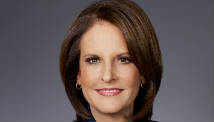
By Gloria Borger, CNN Chief Political Analyst


February 19, 2013 -- Updated 2122 GMT (0522 HKT)


President Obama has a small window of opportunity to get Congress to act on his priorities, Gloria Borger says.


STORY HIGHLIGHTS


  • Gloria Borger: Prospect of deep budget cuts was designed to compel compromise

  • She says the "unthinkable" cuts now have many supporters

  • The likelihood that cuts may happen shows new level of D.C. dysfunction, she says

  • Borger: President may want a 2014 House victory, but action needed now


(CNN) -- So let's try to recount why we are where we are. In August 2011, Washington was trying to figure out how to raise the debt ceiling -- so the US might continue to pay its bills -- when a stunt was hatched: Kick the can down the road.


And not only kick it down the road, but do it in a way that would eventually force Washington to do its job: Invent a punishment.


Gloria Borger

Gloria Borger


If the politicians failed to come up with some kind of budget deal, the blunt instrument of across-the-board cuts in every area would await.


Unthinkable! Untenable!


Until now.


In fact, something designed to be worse than any conceivable agreement is now completely acceptable to many.


And not only are these forced budget cuts considered acceptable, they're even applauded. Some Republicans figure they'll never find a way to get 5% across-the-board domestic spending cuts like this again, so go for it. And some liberal Democrats likewise say 8% cuts in military spending are better than anything we might get on our own, so go for it.


The result: A draconian plan designed to force the two sides to get together has now turned out to be too weak to do that.


And what does that tell us? More about the collapse of the political process than it does about the merits of any budget cuts. Official Washington has completely abdicated responsibility, taking its dysfunction to a new level -- which is really saying something.


We've learned since the election that the second-term president is feeling chipper. With re-election came the power to force Republicans to raise taxes on the wealthy in the fiscal cliff negotiations, and good for him. Americans voted, and said that's what they wanted, and so it happened. Even the most sullen Republicans knew that tax fight had been lost.


Points on the board for the White House.


Now the evil "sequester" -- the forced budget cuts -- looms. And the president proposes what he calls a "balanced" approach: closing tax loopholes on the rich and budget cuts. It's something he knows Republicans will never go for. They raised taxes six weeks ago, and they're not going to do it again now. They already gave at the office. And Republicans also say, with some merit, that taxes were never meant to be a part of the discussion of across-the-board cuts. It's about spending.


Here's the problem: The election is over. Obama won, and he doesn't really have to keep telling us -- or showing us, via staged campaign-style events like the one Tuesday in which he used police officers as props while he opposed the forced spending cuts.


What we're waiting for is the plan to translate victory into effective governance.


Sure, there's no doubt the president has the upper hand. He's right to believe that GOP calls for austerity do not constitute a cohesive party platform. He knows that the GOP has no singular, effective leader, and that its message is unformed. And he's probably hoping that the next two years can be used effectively to further undermine the GOP and win back a Democratic majority in the House.


Slight problem: There's plenty of real work to be done, on the budget, on tax reform, on immigration, climate change and guns. A second-term president has a small window of opportunity. And a presidential legacy is not something that can be kicked down the road.


Follow @CNNOpinion on Twitter.


Join us at Facebook/CNNOpinion.


The opinions expressed in this commentary are solely those of Gloria Borger.


Part of complete coverage on


February 19, 2013 -- Updated 1419 GMT (2219 HKT)


Michael Hayden says the U.S. shouldn't let a lack of consensus at home drive policies on drones, cyber attacks.


February 19, 2013 -- Updated 1719 GMT (0119 HKT)


Apple is getting pushed around these days and its coolness factor seems to be fading. But John Abell says don't be too quick to count Apple out.


February 20, 2013 -- Updated 0100 GMT (0900 HKT)


Actor/producer Jesse Williams says Quentin Tarantino's film "Django Unchained" subordinates black characters and fails to illuminate the history of slavery.


February 19, 2013 -- Updated 1933 GMT (0333 HKT)


Ruben Navarrette believes that it's the guest workers program that will make or break the prospects for immigration reform.


February 19, 2013 -- Updated 1219 GMT (2019 HKT)


Howard Kurtz says lesser news stories eclipsed the follow up coverage that Obama's State of the Union deserved.


February 19, 2013 -- Updated 0024 GMT (0824 HKT)


President Obama may not have the votes to pass gun legislation, but David Frum says the government could do a lot to increase gun safety anyway.


February 19, 2013 -- Updated 0047 GMT (0847 HKT)


Since Canada will not tolerate an influx of zombies, we have to get ready and secure our borders, says Dean Obeidallah.


February 18, 2013 -- Updated 2259 GMT (0659 HKT)


Pablo Spiller says consumers will likely get more choices and improved quality of service.


February 18, 2013 -- Updated 1629 GMT (0029 HKT)


Convincing Congress to take on climate change will be an uphill battle, unless there's strong grass roots support, says Julian Zelizer.


February 17, 2013 -- Updated 1337 GMT (2137 HKT)


Bob Greene says the stories of former slaves, compiled in 1930s, tell of families torn apart, people deprived of basic freedoms


February 18, 2013 -- Updated 0028 GMT (0828 HKT)


Cameron Russell says her looks fit a narrow definition of beauty and her career as a model gives her views undeserved attention


February 19, 2013 -- Updated 0116 GMT (0916 HKT)


Meg Urry says the likelihood that a meteor hits and an asteroid passes close by Earth on the same day is quite improbable, yet the two events happened on Friday


February 19, 2013 -- Updated 1728 GMT (0128 HKT)


Frida Ghitis says the murder of Reeva Steenkamp allegedly by Oscar Pistorius is a reminder that we have to do more to protect women.


Read More..

Cops shoot suspect they say is wanted in string of heists


Chicago police officers shot a man near a busy Bucktown neighborhood intersection after a pursuit that stemmed from an armed robbery at a Subway restaurant on the Near North Side, police said.


Police said the suspect is the same man wanted in more than a dozen robberies of North Side convenience stores and restaurants.


Police said the man shot tonight, about 11:50 p.m., fled from a Subway at 816 N. State Street and the pursuit ended when his SUV crashed into a car outside a Walgreens at 1601 N. Milwaukee Ave.


Police said the suspect did not respond to commands and made suspicious movements inside the vehicle before he was shot.


The other robberies police are investigating happened most often between 11:30 p.m. and 2:15 a.m.


Among the pair: two within hours of each other at 2200 N. Lincoln Avenue and 300 W. Chicago Avenue early in the morning of Feb. 6. 


It’s unclear if the man was shot inside or outside the vehicle and his condition is not known. He was taken to John H. Stroger Jr. Hospital of Cook County and is expected to survive, police said. 


Police from a number of nearby districts responded to the scene after officers called "10-1," a radio term used to signal an officer, firefighter or paramedic in distress. Detectives from two of the three city detective areas also responded to the scene.


Detectives approached people inside and out of the numerous bars that line the intersection asking if anyone saw anything. 


Traffic in the area, including CTA buses, is being rerouted through the neighboring side streets.


Hours after the shooting, as the bars wrapped up for the night, people stood outside smoking and exchanging stories of the cop cars they saw speeding toward the scene.


Check back for updates.


pnickeas@tribune.com
Twitter: @peternickeas


Read More..