European shares, euro rebound from steep losses

LONDON (Reuters) - European shares and the euro on bounced off their previous session's steep falls early on Friday despite unease over European economic forecasts, ECB crisis loan repayment data and Italian elections at the weekend.


The German Ifo business climate indicator for February rose to 107.4 from 104.2, helping to lift the mood after Thursday's disappointing PMI data rattled markets.


It will be followed by new European Commission economic forecasts at 1000 GMT which should show whether there are any signs of recovery outside of Germany. They will also show how far off-track the likes of Spain, France and Portugal are from meeting their deficit targets this year.


European shares on the FTSEurofirst 300 <.fteu3> rose 0.7 percent to recoup some of Thursday's 1.5 percent slump, albeit remaining on course for a third weekly loss in four.


London's FTSE 100 <.ftse>, Paris's CAC-40 <.fchi> and Frankfurt's DAX <.gdaxi> were up 0.7, 1.1 and 0.6 percent respectively, helping lift MSCI's world share index <.miwd00000pus> 0.2 percent as markets recovered from 2013 lows.


"The markets took a heavy dive earlier this week, but they're showing signs of a partial recovery," said Berkeley Futures associate director Richard Griffiths.


"The fact that traders are still buying on the dips shows that they're hoping that the global economic recovery will continue, although it will take time."


In the currency market, the euro extended gains after the German data, climbing 0.3 percent to just above $1.32 following its one percent drop this week.


The dollar <.dxy> was broadly lower, as weak data helped dampen talk of the Federal Reserve winding down its support after its minutes this week showed a minority of its members were questioning the impact of its measures.


Other than the economy, the focus will be on the weekend election in Italy. There is raft of Italian data due out including inflation and consumer confidence numbers for January.


The European Central Bank will also publish details at around 1100 GMT on how much banks plan to repay of its second batch of crisis loans when they get the first chance to return the money next week.


German Bund futures hovered around four-week highs in early trading at 143.40. Italian elections run the risk of producing a fragmented parliament which could hamper the future government's reform efforts. Bunds are seen holding firm at least until the results come out.


"(The) extension of (the) risk averse environment depends on key event risk, particularly (this) weekend's Italian elections," Credit Agricole said in a note.


(Additional reporting by Thuy Ong in Sydney and Florence Tan and Rujun Shen in Singapore; editing by John Mair and Philippa Fletcher)


Read More..

Four Things to Know About Gina McCarthy, Obama’s Pick to Head the EPA


Title Post: Four Things to Know About Gina McCarthy, Obama’s Pick to Head the EPA
Url Post: http://www.news.fluser.com/four-things-to-know-about-gina-mccarthy-obamas-pick-to-head-the-epa/
Link To Post : Four Things to Know About Gina McCarthy, Obama’s Pick to Head the EPA
Rating:
100%

based on 99998 ratings.
5 user reviews.
Author: Fluser SeoLink
Thanks for visiting the blog, If any criticism and suggestions please leave a comment


Read More..

Obama a marker on post-racial path


Donna Brazile says Black History Month is a time to note crossroads the nation has faced.


STORY HIGHLIGHTS


  • Donna Brazile: Black History Month themed crossroads, "tied to two pivotal U.S. events

  • Emancipation Proclamation, March on Washington were crossroads, she says

  • She says crossroad decisions are threaded along U.S. road to post-racial society

  • Brazile: We're not there yet, but re-election of Obama a harbinger


Editor's note: Donna Brazile, a CNN contributor and a Democratic strategist, is vice chairwoman for voter registration and participation at the Democratic National Committee. She is a nationally syndicated columnist, an adjunct professor at Georgetown University and author of "Cooking with Grease." She was manager for the Gore-Lieberman presidential campaign in 2000.


(CNN) -- Politicians and historians love to use the word "crossroads."


It's become as American, and cliched, as "Mom's apple pie." The historian Shelby Foote, wrote, "The Civil War defined us as what we are and it opened us to being what we became, good and bad things. ... It was the crossroads of our being, and it was a hell of a crossroads."


I have been thinking about the word, because this year's Black History Month theme is "At the Crossroads of Freedom and Equality: The Emancipation Proclamation and the March on Washington." Two pivotal events that shaped modern American history.


A "crossroads" is literally the intersection of two or more roads -- two or more paths to get to the same place. Metaphorically, it refers to the place -- the moment -- of a critical decision. Shall we go forward together? Shall we separate? Shall we fight?


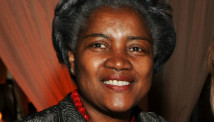
Donna Brazile

Donna Brazile


We mark history's crossroads not by road signs but by the documents that identify them. The Declaration of Independence is certainly one. Who has not memorized the opening of the second paragraph? "We hold these truths to be self-evident, that all men are created equal, that they are endowed by their Creator with certain unalienable Rights, that among these are Life, Liberty, and the Pursuit of Happiness."


Political philosopher John Locke's original term was, "Life, liberty, and property." Thomas Jefferson borrowed the phrase, changing "property" to "the pursuit of happiness." He understood that "happiness" -- being significant -- was more important than property, and that a "right to property" too often meant a "right" to own someone else, i.e. slavery.


Locke rejected the "divine right of kings." He argued instead that God invested each person with an innate equality -- the right to be on this Earth and to be free -- free to pursue dreams. On the way to his first inauguration, Abraham Lincoln stopped at Independence Hall in Philadelphia to celebrate Washington's birthday. He told the assembled crowd, "I have never had a feeling politically that did not spring from the sentiments embodied in the Declaration of Independence."


Lincoln's issuance of the Emancipation Proclamation in 1863 was another crossroads, one that required Lincoln, and the nation, to walk a long road of personal and national growth. "All men are created equal" had to take on a deeper meaning. Frederick Douglass, one of Lincoln's "guides" on his journey, later said the quality he most admired in Lincoln was his political courage.


Confederate President Jefferson Davis once acknowledged to an Atlantic Monthly writer that Lincoln's Emancipation resulted in the self-liberation of "two millions of our slaves."


A journey of a hundred years brought us to another crossroads -- the 1963 March on Washington. While "property in man" no longer existed, millions of Americans were unable to pursue their dream, or to live with full equality.


James Farmer, a leading civil rights activist who was in jail in my home state of Louisiana, sent a message to the quarter-million in attendance that summer day, saying his people would not be free "until the dogs stop biting us in the South and the rats stop biting us in the North."


Martin Luther King, Jr.'s "I Have a Dream" speech, like the Declaration, resonates. It echoes through the years in the heartbeats of Americans. The "pursuit of happiness" is more than pleasure, for we often take great pains in the pursuit. Rather, the pursuit of happiness is the freedom to pursue our dreams, to make meaning in and find the unique significance of our lives.


That is something we can only do when, in the bonds of fellowship and shared history, we nurture our dreams. The caged bird sings of freedom, but the freed bird sings of dreams. Today, we are 150 years further down the road to realizing the American creed of equality and freedom. We reached a crossroads in 2008 with the election of our first African-American president. We chose to continue on the road to a "post-racial" society.


We're not there yet. But in 2012, when we could have chosen to travel down another road, one that led to further economic inequality, we chose instead to continue the realization of equality and freedom, and to the unfettered pursuit of dreams for each American.


In some ways, the re-election of President Obama is more significant than his election four years ago. I say this not because I'm a Democrat, but because this time, the dog-whistles of racism were called out and condemned by people of faith and goodwill on both sides of the aisle.


During the next four years, we'll come to more crossroads. I pray, and believe, we will take the road to freedom and equality for each child, man and woman in America.


Follow us on Twitter @CNNOpinion


Join us on Facebook/CNNOpinion


The opinions expressed in this commentary are solely those of Donna Brazile.


Read More..

Storm begins to coat Chicago area with snow


Between and inch-and-a-half and two-and-a-half inches of snow has fallen across much of the Chicago region, though the snow is expected to turn to freezing drizzle in the next couple hours.


Meteorologists have scaled back their predictions on snow fall totals from the storm, though.


Illinois State Police described conditions as "horrible" and have responded to about 15 crashes already.


State Police are in a "snow plan" and aren't responding to accidents without injuries - those are supposed to be reported later.


"It will be tapering off from the south in the next couple hours, possibly some freezing drizzle across whole area," said Mark Ratzer, meteorologist for the National Weather Service. "We may end up coming in a little less."


The city of Chicago has sent 199 plows to work clearing main thoroughfares, according to the streets and sanitation department.


Check back for more information.


chicagobreaking@tribune.com

Twitter: @ChicagoBreaking


Read More..

Syrian opposition says Assad cannot be part of deal


CAIRO (Reuters) - The opposition Syrian National Coalition is willing to negotiate a peace deal to end the country's civil war but President Bashar al-Assad must step down and cannot be a party to any settlement, members agreed after debating a controversial initiative by their president.


The meeting of the 70-member Western, Arab and Turkish-backed coalition began on Thursday before Syrian Foreign Minister Walid al-Moualem is due for talks in Moscow, one of Assad's last foreign allies, and as U.N. mediator Lakhdar Brahimi renews efforts for a deal.


After an angry late night session in which coalition president Moaz Alkhatib came under strong criticism from Islamist and liberal members alike for proposing talks with Assad's government without setting what they described as clear goals, the coalition adopted a political document that demands Assad's removal and trial for the bloodshed, members said.


A draft document seen by Reuters that was circulated for debate said Assad cannot be party to any political solution and has to be tried, but did not directly call for his removal.


"We have adopted the political document that sets the parameters for any talks. The main addition to the draft is a clause about the necessity of Assad stepping step down," said Abdelbasset Sida, a member of the coalition's 12 member politburo who has criticized Alkhatib for acting alone.


"We removed a clause about a need for Russian and U.S. involvement in any talks and added that the coalition's leadership has to be consulted before launching any future initiatives," he added.


Still, the agreement marked a softening of tone by the coalition because previously it had insisted that Assad must step down before any talks with his government could begin.


In an indication that Syria's strongman remains defiant, Brahimi said Assad had told him he will remain president until his term ends in 2014 and then run for re-election.


Brahimi told al-Arabiya television he wants to see a transitional government formed in Syria that would not answer to any higher authority and lasts until U.N.-supervised elections take place in the country.


"I am of the view that U.N. peacekeepers should come to Syria as happened in other countries," Brahimi said.


BOMB, AIR STRIKES


The opposition front convened in Cairo on a day when a car bomb jolted central Damascus, killing 53 people, wounding 200 and incinerating cars on a busy highway close to the Russian Embassy and offices of the ruling Baath Party.


Syrian state television blamed the suicide blast on "terrorists". Central Damascus has been relatively insulated from the 23-month conflict that has killed around 70,000 people, but the bloodshed has shattered suburbs around the capital.


In the southern city of Deraa near the border with Jordan, activists said warplanes bombed the old quarter for the first time since March 2011, when the town set in a wheat-growing plain rose up against Assad, starting a national revolt.


A rebel officer in the Tawheed al-Janoub brigade which led an offensive this week in Deraa said there were at least five air strikes on Thursday. The Syrian Observatory for Human Rights said 18 people were killed, including eight rebel fighters.


Coalition member Munther Makhos, who was forced into exile in the 1970s for his opposition to Assad's father, the late President Hafez al-Assad, said supplies from Iran and Russia were giving government forces an awesome firepower advantage.


"It would be surreal to imagine that a political solution is possible. Bashar al-Assad will not send his deputy to negotiate his removal. But we are keeping the door open," Makhos said.


Makhos is the only Alawite in the Islamist-dominated coalition. The Alawite sect, an offshoot of Shi'ite Islam which accounts for about 10 percent of Syria's population but makes up most of the intelligence apparatus and dominates the army and the political system, has generally remained behind Assad.


With Alawites feeling increasingly threatened by a violent Sunni backlash, Alkhatib, a cleric from Damascus who played a role in the peaceful protest movement against Assad at the beginning of the uprising in 2011, has been calling on Alawites to join the revolution, saying their participation will help preserve the social fabric of the country.


Alkhatib's supporters say the initiative has popular support inside Syria from people who want to see a peaceful departure of Assad and a halt to the war that has increasingly pitted his fellow Alawites against Syria's Sunni Muslim majority.


But rebel fighters on the ground, over whom Alkhatib has little control, are generally against the proposal.


The Syrian Islamic Liberation Front, which represents armed brigades, said in a statement it was opposed to Alkhatib's initiative because it ignored the revolt's goal of "the downfall of the regime and all its symbols".


"We are demanding his accountability for the bloodshed and destruction he has wreaked. I think the message is clear enough," said veteran opposition campaigner Walid al-Bunni, who supports Alkhatib.


Alkhatib formulated the initiative in broad terms last month after talks with the Russian and Iranian foreign ministers in Munich but without consulting the coalition, catching the umbrella organization by surprise.


Among Alkhatib's critics is the Muslim Brotherhood, the only organized group in the political opposition.


A Brotherhood source said the group will not scuttle the proposal because it was confident Assad is not interested in a negotiated exit, which could help convince the international community to support the armed struggle for his removal.


"Russia is key," the source said, speaking on condition of anonymity. "We are showing the international community that we are willing to take criticism from the street but the problem is Assad and his inner circle. They do not want to leave."


PLAY FOR RUSSIA


Russia hopes Alkhatib will visit soon in search of a breakthrough. Bunni said Alkhatib would not go to Moscow without the coalition's approval and that he would not be there at the same time as Moualem.


"In my opinion Alkhatib should not go to Moscow until Russia stops sending arms shipments to the Assad regime," Bunni said.


Formal backing by the coalition for Alkhatib's initiative gives it more weight internationally and undermines Assad supporters' argument that the opposition is too divided to be considered a serious player, opposition sources said.


Coalition members and diplomats based in the region said Brahimi asked Alkhatib in Cairo last week to seek full coalition backing for his plan, which resembles the U.N. envoy's own ideas for a negotiated settlement.


One diplomat in contact with the opposition and the United Nations had said a coalition approval of Alkhatib's initiative could help change the position of Russia, which has blocked several United Nations Security Council resolutions on Syria.


The diplomat said only a U.N. resolution could force Assad to the negotiating table, and a U.N. "stabilization force" may still be needed to prevent an all-out slide into a civil war.


"Brahimi has little hope that Assad will agree to any serious talks," the diplomat said. "Differences are narrowing between the United States and Russia about Syria but Moscow remains the main obstacle for Security Council action."


(Editing by Paul Taylor and Mohammad Zargham)


Read More..

Doubt on Fed easing hits shares, commodities

LONDON (Reuters) - World share markets fell and the dollar and safe-haven assets rose on Thursday, a day after minutes of the Federal Reserve's last policy meeting cast doubts over how much longer the U.S. central bank would stick to its stimulus plan.


After the minutes were released the euro skidded to a six-week low against the dollar of $1.3235, Asian shares experienced their worst day in seven months and gold hit its lowest price since last July, at $1,554.49 an ounce.


"Disagreement over the current path is causing concern for a market that demands certainty," Ben Taylor, a trader at CMC Markets, said of evidence Fed officials were divided on policy.


MSCI's world equity index <.miwd00000pus>, which only on Wednesday had touched a 4-1/2 year high, fell 0.5 percent as the benchmark S&P 500 index <.spx> suffered its steepest daily percentage decline since mid-November.


European markets joined in the selloff with the FTSE Eurofirst 300 index <.fteu3> shedding 0.5 percent, led lower by the banks <.sxip>, which have been at forefront of recent gains. London's FTSE 100 <.ftse>, Paris's CAC-40 <.fchi> and Frankfurt's DAX <.gdaxi> were all down as much as 0.7 percent.


However, market sentiment could get some support from the release of first reading from February Purchasing Managers' Indexes (PMIs) from across Europe later in the day.


The euro-zone composite PMI is expected to have risen for a fourth consecutive month in February to around 49.0, adding to evidence that economic conditions across the recession-hit region are gradually improving.


The PMI reading would still leave the composite index below the 50 mark which separates expansion from contraction and analysts estimate it would be consistent with a small fall in GDP for a fourth consecutive quarter.


In the fixed income market, German bonds, normally considered a safe haven, saw prices rise with the main Bund futures contract up 30 ticks to 142.85. The move reversed a fall seen on Wednesday but kept the contract within a narrow band before an Italian general election this weekend.


Spain was set to test market sentiment for peripheral euro zone debt with the sale of up to four billion euros of new paper.


The dollar followed up a big gain on Wednesday against a basket of major currencies to add a further 0.1 percent, although it dipped slightly against the yen to 93.41.


Among commodities, London copper struck its lowest in nearly two months, at $7,880 a metric ton, while crude oil extended losses after posting its biggest daily fall so far this year on Wednesday.


(Reporting by Richard Hubbard; Editing by Alastair Macdonald)


Read More..

Police: Pistorius detective faces charges himself


PRETORIA, South Africa (AP) — The lead investigator in the murder case against Oscar Pistorius faces attempted murder charges himself over a 2011 shooting, police said Thursday in another potentially damaging blow to the prosecution.


Prosecutors said they were unaware of the charges against veteran detective Hilton Botha when they put him on the stand in court to explain why Pistorius should not be given bail in the Valentine's Day shooting death of his girlfriend.


Prosecutors say Pistorius intentionally killed model Reeva Steenkamp and have charged him with premeditated murder. Pistorius says he mistook Steenkamp for an intruder and that the shooting was accidental.


Police Brig. Neville Malila told The Associated Press that Botha — who gave testimony in the Pistorius bail hearing on Wednesday — is scheduled to appear in court in May on seven counts of attempted murder related to an incident in October 2011 when Botha and two other police officers fired at a minibus they were trying to stop.


Malila said police had learned Wednesday, the same day that Botha appeared in court to oppose Pistorius' bail application, that the charges against Botha and the two others had been reinstated by the Director of Public Prosecutions. They were initially dropped following the shooting incident.


Malila said police were now waiting for details from the Botha case file from the public prosecutor.


Medupe Simasiku, the spokesman for the prosecutors charging Pistorius with premeditated murder, said he couldn't say how the charges against Botha would affect their case against Pistorius.


In the state case against the Olympic athlete, Botha offered often confused testimony and conceded that nothing in Pistorius' account the Steenkamp shooting contradicted the police's version.


Simasiku said that based on the reinstated accusation against Botha, "we can take action and see if we remove him from the investigation or if he stays."


Botha was the lead investigator in an assault claim against Pistorius in 2009. Pistorius' lawyers said police arrested the athlete and held him overnight at a police station and said they will pursue a lawsuit against police for wrongful arrest.


The current case against Pistorius, which is still only in a bail hearing, has riveted much of the world. Pistorius, 26-year-old the man known as the Blade Runner for his carbon-fiber running prosthetic legs, says he fired shots through the locked door of a toilet enclosed inside his bathroom because he thought there was an intruder in there.


Steenkamp was hit three times, in the head, right elbow and right hip, police say, and prosecutors argue Pistorius intended to kill his 29-year-old girlfriend after a fight in the early hours of Valentine's Day.


___


AP Sports Writer Gerald Imray in Johannesburg contributed to this report.


Read More..

Touchy-Feely Bionic Hand Closer to Reality


A new and better bionic hand under development connects directly to the nervous system and could one day return dexterity and sensation to amputees, researchers say.


In recent years, a plethora of bionic hands have emerged for amputees. However, surveys of those using such artificial hands have revealed that up to 50 percent of amputees do not use the prosthesis regularly, due to poor functionality, appearance and controllability.


So, to improve the amount of dexterity and sensation of these bionic hands, scientists reasoned they could use interfaces that link the hands with the nervous system, potentially enabling intuitive control and realistic sensory feedback.


“Our dream is to have Luke Skywalker getting back his hand with normal function,” researcher Silvestro Micera told TechNewsDaily, referencing the hero in “Star Wars” who gets an artificial hand after his real one is cut off.


[Brainpower: Human Minds May Soon Control Prosthetic Limbs]


Micera is the head of the translational neural engineering lab at the Swiss Federal Institute of Technology in Lausanne, Switzerland, which is one of the collaborators helping to develop the new bionic hand.


In a four-week clinical trial, Micera and his colleagues found they could improve the sensory feedback an amputee received from bionics by using electrodes implanted into the median and ulnar nerves in the arm near the stump. This helped deliver feelings of touch.


In addition, the researchers analyzed motor neural activity from the nerves, signals used to help control muscles. They found they could tease out signals related to grasping to help control a prosthetic hand placed near the amputee but not physically attached to the person’s arm. In other words, it may be possible to develop an artificial hand that can transmit signals to and respond to data from the brain.


“We could be on the cusp of providing new and more effective clinical solutions to amputees in the next years,” Micera said.


Micera and his colleagues also announced a new clinical trial that will soon connect the prosthetic hand directly to a patient as part of the Italian Ministry of Health’s NEMESIS project. They hope to further improve sensory feedback and overall control of bionics this way.


A key problem is how electricity from the electrodes can inflame cells, forcing the body to grow tissue around the electrodes that dampen signals to and from the bionic hand. Micera suggested drugs or coatings on the electrodes might help prevent such inflammation.


Natural hands normally possess 22 degrees of freedom, meaning they can flex 22 different ways — for instance, they can spread fingers apart. While 22 degrees of freedom are currently unrealistic for prosthetic hands, the four or five different grasping tasks the research team’s device can provide can be very helpful, Micera said.


In the future, artificial hands may connect not only with nerves in the periphery of the nervous system, such as those in the limbs, but may also link with the spinal cord. “A hybrid solution that combines both approaches may be the way to go,” Micera said.


Future research might also have amputees prepare for what bionic hands might feel like using virtual-reality experiments that could help them reconstruct their body images. “In the medium term, we’d like to have virtual-reality environments for training patients,” Micera said.


Still, much work remains before artificial hands are as capable as natural ones.


“I think the Luke Skywalker hand is probably 20 or 30 years away, maybe even more,” Micera said.


The scientists recently detailed their findings at the annual meeting of the American Association for the Advancement of Science in Boston.


This story was provided by TechNewsDaily, a sister site to LiveScience.


Copyright 2013 LiveScience, a TechMediaNetwork company. All rights reserved. This material may not be published, broadcast, rewritten or redistributed.
Science News Headlines – Yahoo! News


Title Post: Touchy-Feely Bionic Hand Closer to Reality
Url Post: http://www.news.fluser.com/touchy-feely-bionic-hand-closer-to-reality/
Link To Post : Touchy-Feely Bionic Hand Closer to Reality
Rating:
100%

based on 99998 ratings.
5 user reviews.
Author: Fluser SeoLink
Thanks for visiting the blog, If any criticism and suggestions please leave a comment


Read More..

Tribune exclusive: 'We were just regular parents who were slapped in the face'


The parents of slain teen Hadiya Pendleton talk about her life and death and the issues raised after she died. (Chris Walker/Chicago Tribune)


Hadiya Pendleton’s parents haven’t had much time to reminisce about their daughter’s life and death before Wednesday, when they sat down for an exclusive interview with the Tribune.


Cleopatra Cowley-Pendleton recalled getting the phone call on Jan. 29 that her 15-year-old daughter had been shot, and rushing to the hospital only to find out it was too late, her daughter was dead.


A whirlwind of activity followed as Hadiya became a national symbol of gun violence and her parents traveled to Washington for President Barack Obama’s State of the Union speech.


“I’m not going to be extremely political, but if I can help someone else not go through what we’ve gone through, then I have to do what I can,” Cowley-Pendleton said. “These are the cards we have been dealt. If these are the shoes I need to walk in, I don’t mind walking in them.”


To read the full story, you must be a digitalPlus member.


Read More..

European shares steady awaiting further growth signals

LONDON (Reuters) - European share markets were little changed on Wednesday, awaiting further signs of improving global economic recovery after a big rise in the previous session fuelled by encouraging German data.


The FTSE Eurofirst <.fteu3> index of top European shares was down 0.1 percent in early trading, having gained 1.1 percent on Tuesday, its best day for three weeks <.fteu3>.


London's FTSE 100 <.ftse>, Paris's CAC-40 <.fchi> and Frankfurt's DAX <.gdaxi> were all close to flat. <.eu/>


"I see no reason why we can't consolidate the gains and possibly move higher," said Michael Hewson, an analyst at CMC Markets.


Global share markets surged on Tuesday after forecast-beating German sentiment data pointed to an accelerating recovery in Europe's largest economy.


The data comes ahead of more important euro zone flash Purchasing Managers Indexes on Thursday and a German business sentiment survey on Friday that could show whether the region's recovery is taking hold.


The rising hopes of recovery have been supported on Wall Street by a surge in merger activity that has sent U.S. benchmark shares indexes close to record highs. <.n>.


In Asia, share markets outside Japan are at 18-month highs <.miapj0000pus>, as the relatively stronger growth outlook compared with Europe and the United States has drawn in foreign investors.


The rise in equities has weighed on assets perceived as safe havens, with German Bund futures down 25 ticks in early trade to 142.57, though news that Spain may be about to issue a U.S. dollar bond supported sentiment.


In the currency markets the euro rose 0.2 percent to $1.3413 but sterling fell to its lowest in nearly 16 months against a trade-weighted basket of currencies.


Currency traders have their eyes on central banks and the minutes of policy meetings at the Bank of England and the U.S. Federal Reserve that are due to be published later in the day.


The Bank of England minutes at 0930 GMT may reiterate a tolerance for higher inflation or greater disagreement among policymakers over the value of restarting the bank's asset purchase program.


Commodities markets mostly followed equities higher, with spot gold inching up 0.2 percent to $1,605.90 an ounce but stuck near a six-month low.


London copper edged up 0.2 percent to $8,067.75 a metric ton, off Tuesday's three-week lows but Brent crude was little changed at $117.47 a barrel.


(Additional reporting by Masayuki Kitano in Singapore and Thuy Ong in Sydney; Editing by Eric Meijer)


Read More..